

Brass Ball Valve
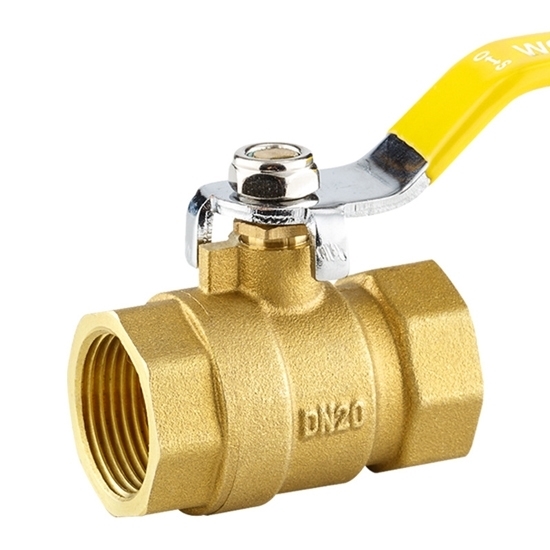
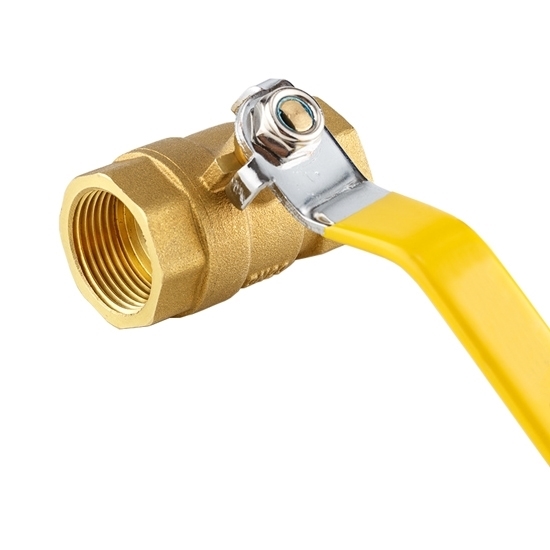
The valve body is made from high-quality brass forging to prevent leakage. Brass ball valve is manufactured by a high-precision special machine with low flow resistance. The […]

2 years full warranty

Worldwide shipping

Secure payment
The valve body is made from high-quality brass forging to prevent leakage. Brass ball valve is manufactured by a high-precision special machine with low flow resistance. The medium inside the valve body has a straight channel, and the medium flows in a straight line.
Specification
- Nominal Pressure: 1.6MPa
- Body Material: Brass
- Connection Type: Thread
- Standard: Compliant with ISO 228 Standard
- Applicable Temperature: -10℃≤T≤120℃
- Working Medium: Water, Oil, Non-Corrosive and Non-Combustible Gas
- Weight: 150g
Note*: This brass ball valve can not be used for drinking water.
Dimensions & Details (Unit: mm)

Tips: Hand operated brass ball valve working principle
The working principle of the manual ball valve is to make the valve unblocked or blocked by rotating the valve core. The ball valve switch is light, small in size, can be made into a large diameter, reliable sealing, simple structure, convenient maintenance, the sealing surface and the spherical surface are often closed, and are not easily eroded by the medium, and are widely used in various industries.
Open process
- In the closed position, the ball is pressed against the valve seat by the mechanical pressure of the valve stem.
- When the handle is turned counterclockwise, the valve stem moves in the opposite direction, and its bottom angular flat makes the ball disengage from the valve seat.
- The stem continues to lift and interacts with the guide pin in the stem’s helical groove, causing the ball to begin to rotate without friction.
- Until it reaches the fully open position, the valve stem is lifted to the limit position, and the ball rotates to the fully open position.
Shutdown process
- When closed, turn the handle clockwise, the valve stem starts to descend and the ball leaves the valve seat and starts to rotate.
- Continue to rotate the handle, the valve stem is acted by the guide pin embedded in the upper spiral groove, so that the valve stem and the ball rotate 90° at the same time.
- Just before closing, the ball rotated 90° without making contact with the seat.
- During the last few turns of the handle, the angular plane at the bottom of the valve stem mechanically wedges the ball to press it tightly against the valve seat to achieve a complete seal.
Find out tools that you need
A wide range of professional tools for home improvement and trade experts
Reviews
There are no reviews yet.